
Prince George's County's Most Wanted Program
Prince George's County splits the work between two offices. The Sheriff's Office posts the most-wanted material on its own site, while the county's Crime Solvers program handles the tips. Both show cases the agencies want the public talking about. Neither asks readers to act on anything. Crime Solvers itself pairs the community with law enforcement to gather information on unsolved crimes and wanted people. A tip that qualifies can earn a reward.
Crime Solvers: The Official Tip Program
Crime Solvers takes tips anonymously around the clock. Prince George's County residents can reach it three ways: the P3 Tips mobile app, the program website, or the telephone line. A submission can carry photographs, video, and audio. Send whatever you have through the channel that suits you. The program's published reward statement stands at up to $2,500, though that is a program figure rather than a promise for any single case. Information that does not meet the program's terms earns nothing. The page you submit through is simply the public front end for those anonymous reports.
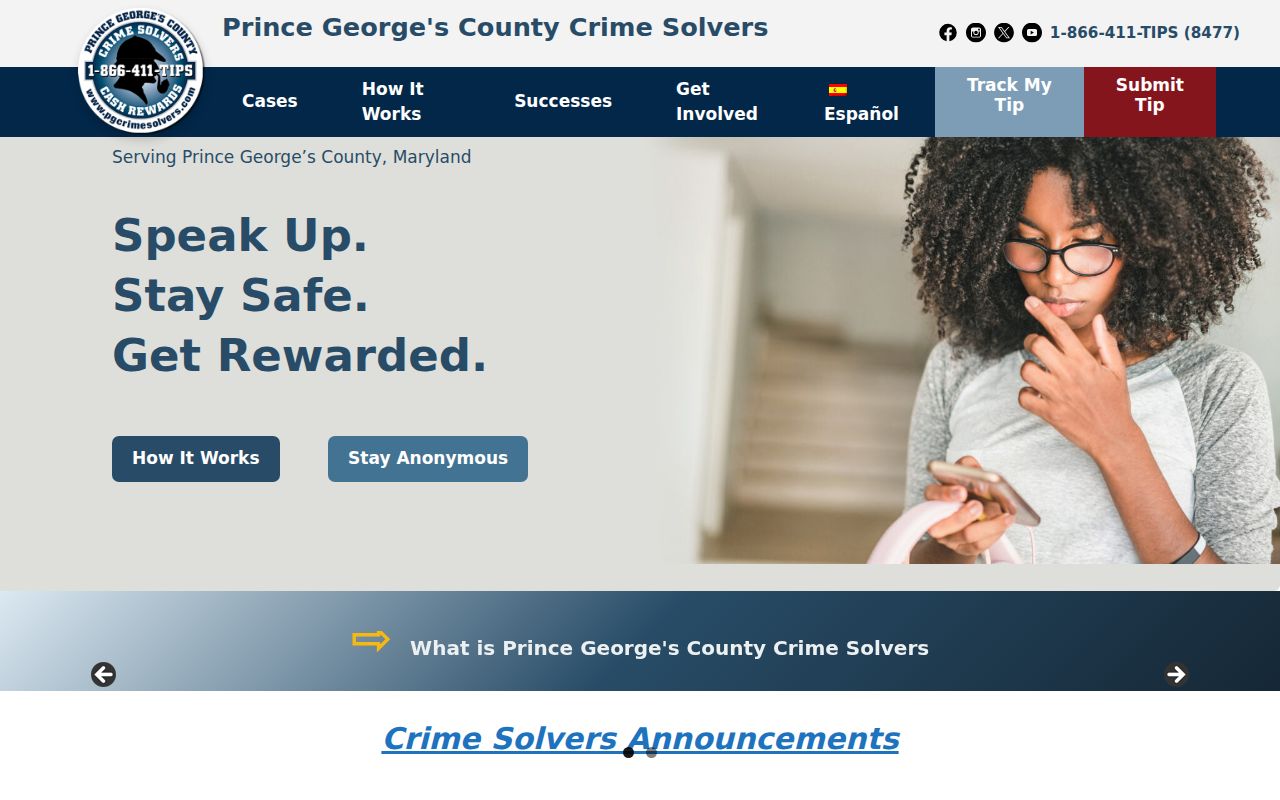
A tip travels to the program, never the courts. It cannot confirm or clear your own Prince George's County warrant.
How the Most Wanted Lists Work
The Prince George's County Sheriff's Office picks the cases it publicizes, and Crime Solvers promotes what its partners bring forward. Entries come and go. A warrant served, recalled, or resolved drops off the list.
Note: Because entries change without notice and the agencies publish their own cadence, the official page is the only current version of the list.
Wanted Wednesday and the Felony Arrest Cards
The Sheriff's Active Warrant Database files its public cards under labels like Felony Arrest and Wanted Wednesday. Both are curated picks, not a full export of Prince George's County warrants. Each card carries a tip link. A tip reports what you know; it does not check a status, and it will not confirm your own case. For your own status, call the Sheriff's warrant line instead.
Reporting a Tip Safely
A safe tip is information, not involvement. Send what you know through an official Prince George's County channel and let the program handle the rest.
- Use the P3 Tips app, the Crime Solvers website, or the program's 24-hour telephone line at 1-866-411-TIPS (8477).
- Report what you observed: vehicle, location, time, and other details you actually saw, not conclusions about a person.
- Attach a photograph, video, or audio file only if you obtained it lawfully and can describe when it was taken.
- Keep your tip reference number if the program provides one, and do not post your submission on social media.
Key Point: Tips are anonymous and can qualify for a reward after an arrest and indictment. A tip is not a legal filing, and it cannot clear or confirm a warrant.
Rewards, Posters, and How the Program Pays
Reward language differs from one document to the next. A standard Crime Solvers poster names no amount at all. A special poster, used for homicide, sexual assault, and carjacking cases, can state up to $25,000. The current public program page, meanwhile, gives a general reward of up to $2,500. Read the poster or program page attached to the Prince George's County case rather than guessing a number. Payment belongs to the program alone. It follows the terms tied to that specific case.
Most Wanted Lists vs Active Warrants
The two products do different jobs. Mistaking a Prince George's County most-wanted card for an active warrant list is the most common error here.
| Point | Most wanted list | Active warrant list |
|---|---|---|
| What it is | A curated public-safety and tip program | Agency-published active and wanted cards |
| Why it exists | To gather anonymous information about selected cases | To show a public slice of open warrants |
| What it covers | Cases the agencies choose to publicize | Warrants the agency chooses to publish, and not every court order |
| What it cannot tell you | Whether a warrant exists, is current, or has been recalled | The same, because neither interface is a complete docket |
Why the List Is Linked, Not Copied
Why link out rather than copy the roster here? A copied list stops being accurate the moment it goes up. Someone named on it may have already turned themselves in. Prince George's County also keeps its page fresh, since the department maintains it directly. Any copied version, saved image included, is stale on arrival. Names and photographs deserve that care. Treat them as a public-safety tool, not a permanent mark. The county's Crime Solvers program page posts the tip channels and the reward statement straight from the source.
If You Think You Are on a List
Call the Prince George's County Sheriff's warrant line at 301-780-8600, then the issuing court clerk. Ask whether an order exists and what it requires. Ask what document shows it has been recalled. Never send a tip about yourself, and never try to negotiate through the tip program.
Important: Contact an attorney before you act on an open order, and never approach a person or a location based on a published card.
No Approach, and No Payment by Phone
Impersonation callers love naming a warrant or a most-wanted list. Maryland courts and Prince George's County police both say their offices never demand payment by phone for a warrant, a delinquent ticket, or a missed jury date. Hang up at the first request for a gift card, a money pack, a money-transfer app payment, or bank details. Do not argue. Look up the Sheriff's number or the courthouse number yourself and call that instead. The county's scam warning page walks through the pattern these calls follow.